Templestay · one or two nights
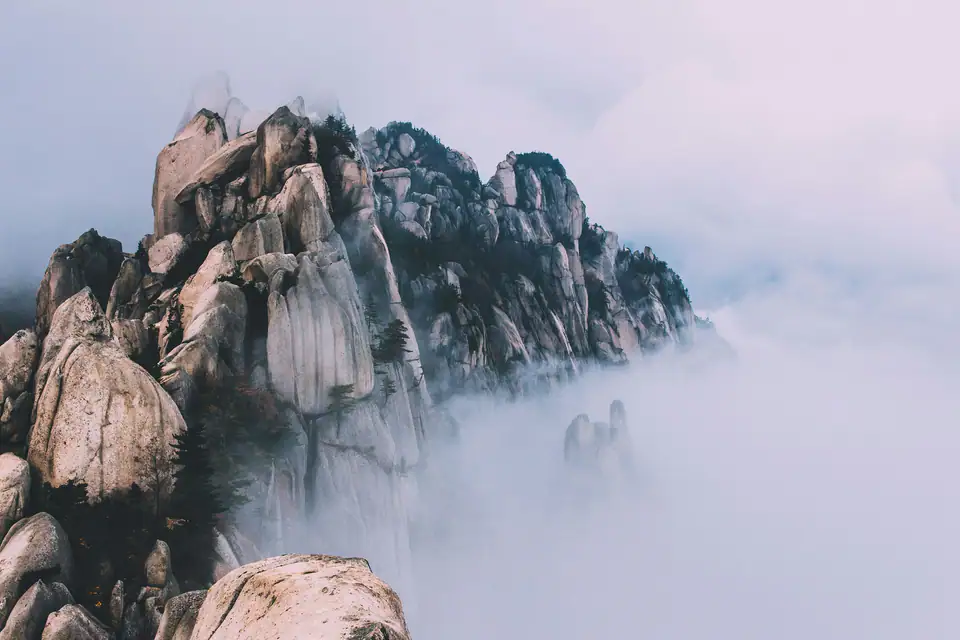
A night in a mountain temple
You arrive in the afternoon, change into grey cotton, eat in silence, and go to bed at nine. At half past three a monk walks past with a wooden clapper. Most guests say it was the best night of the trip; a few say it was the hardest. Both can be true.
Hour by hour
14:00
Arrive
A typical overnight programme. Each temple runs its own timetable.
- 14:00
Arrive
Check in, change into the loose temple clothes provided. Phones go on silent.
- 15:00
Orientation
How to put your palms together (hapjang), how to bow, where to walk, what not to touch.
- 16:00
Temple walk
A volunteer or monk explains the halls, the paintings and the shrines.
- 17:30
Supper
Temple food: rice, soup and vegetables, no meat, fish, garlic or onion. Some temples teach baru gongyang, the formal bowl meal, where nothing is left.
- 18:30
Evening ceremony
The drum, the wooden fish, the cloud-shaped gong and the great bell, then chanting in the main hall.
- 19:30
Tea or meditation
Seated meditation, or tea with a monk who answers questions through an interpreter.
- 21:00
Lights out
You sleep on a thin mattress on a heated floor, usually in a shared room.
- 03:30
Wake
A monk walks the courtyard with a moktak (wooden clapper).
- 04:00
Dawn ceremony
Chanting in the dark hall. The bell is struck many times.
- 05:00
108 bows
Optional and hard on the knees. Some temples have you thread a bead for each bow.
- 06:00
Breakfast
Rice porridge and vegetables.
- 07:00
Communal work
Sweeping paths or leaves, together and in silence.
- 08:30
Forest walk
A walking meditation on the hill above the temple.
- 10:30
Depart
Change back into your own clothes. Most overnight stays end by late morning.
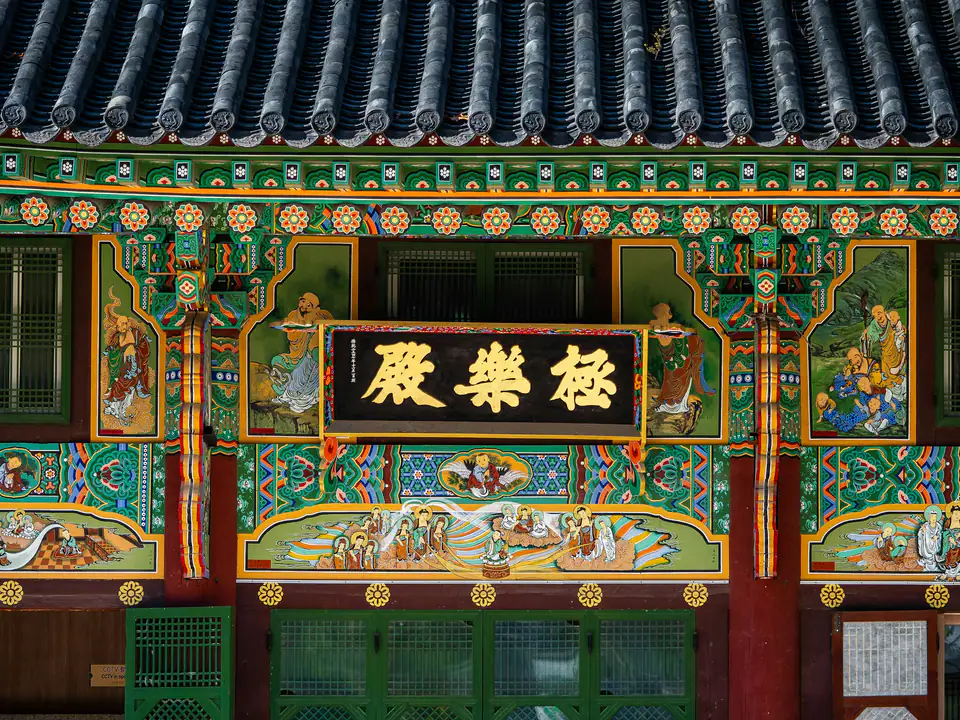
Drum,gong,wooden fish,bell
Evening ceremony
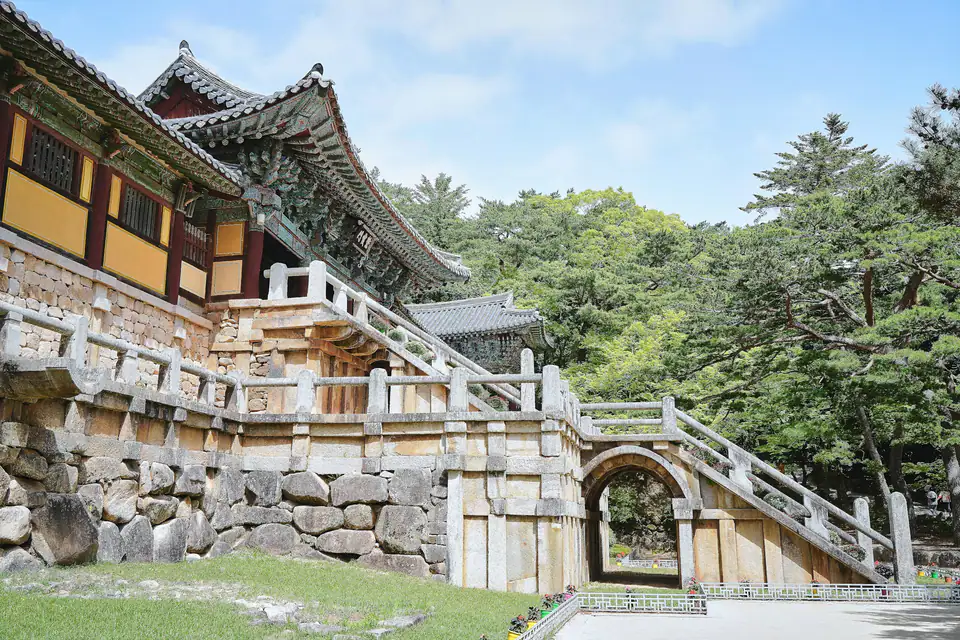
Mountain temples, South Korea
Which temple first
We match the temple to the person. For a first stay, we look for a shorter programme, English support and a temple that is easy to reach. Programmes change; we confirm each one before booking.
gentle moderate demanding
-
Jogyesa 조계사
Central Seoul
Easiest first step
Head temple of the Jogye Order, in the middle of the city. Short programmes make it a gentle introduction before a mountain temple.
-
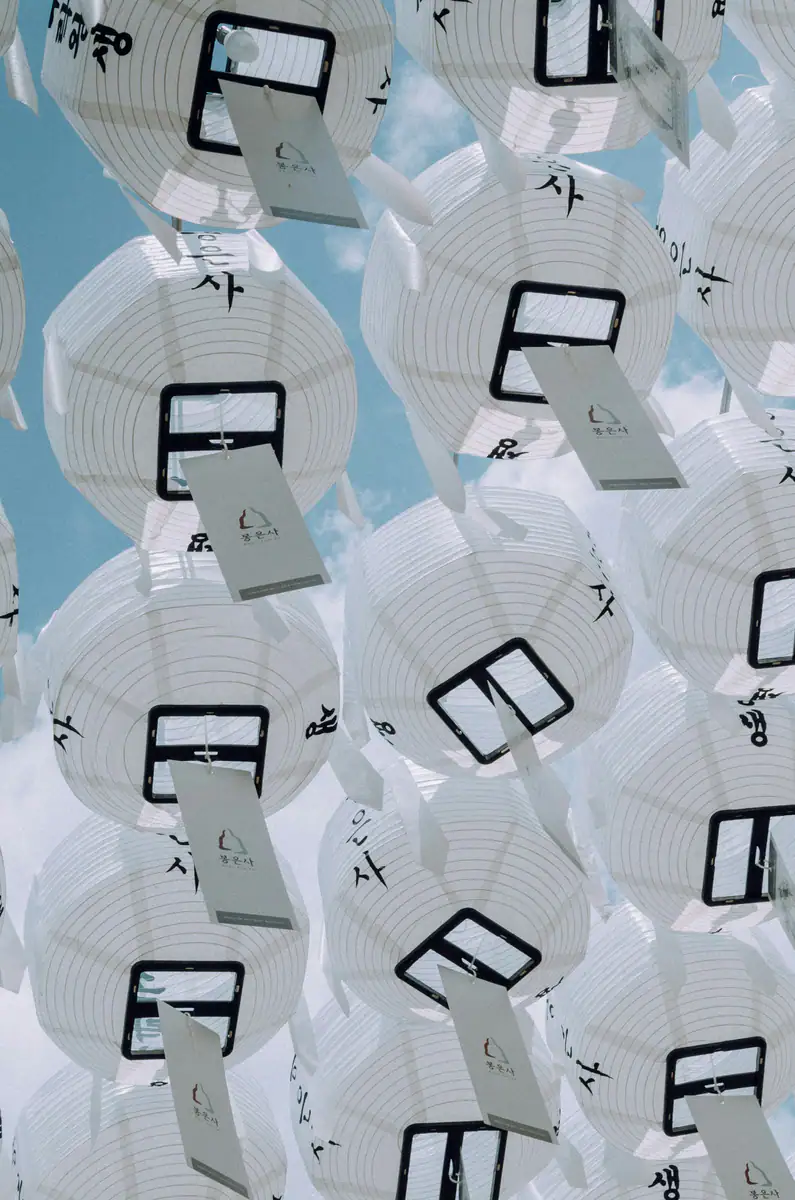
Bongeunsa 봉은사
Gangnam, Seoul
First-timers short on time
An old temple surrounded by towers. Day and overnight programmes in English on set days.
-
Sinheungsa 신흥사
Seoraksan
Mountains and a gentle schedule
At the entrance to Seoraksan National Park. Pair it with a walk the next morning.
-
Golgulsa 골굴사
Near Gyeongju
Active first-timers
Known for Sunmudo, a Buddhist martial art taught to guests, and a Buddha carved into the cliff.
-
Magoksa 마곡사
Gongju, Chungcheong
Quiet, after a first stay
One of the mountain monasteries on UNESCO’s Sansa list. A river runs through the grounds.
-
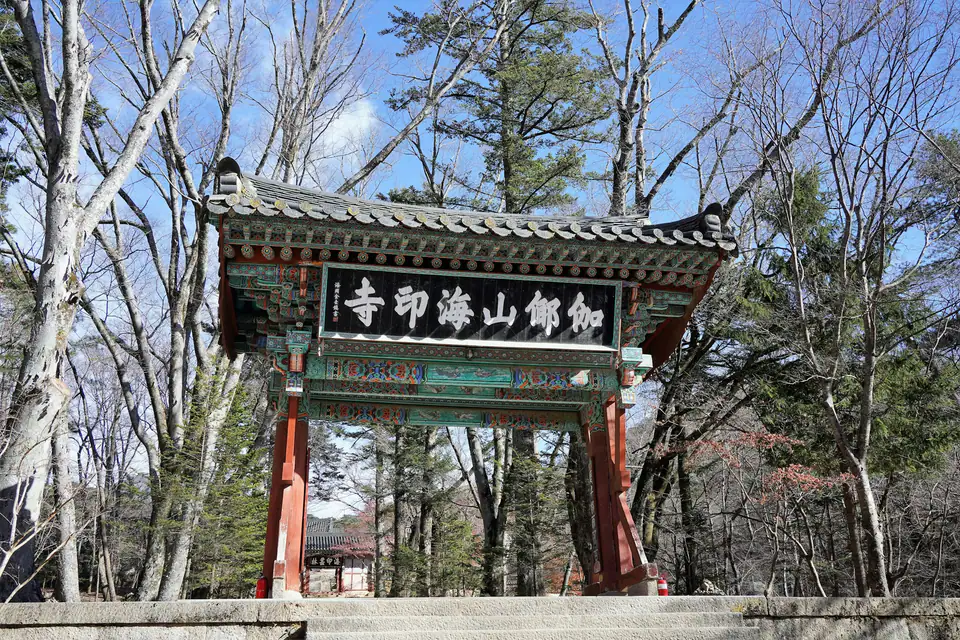
Haeinsa 해인사
Gayasan, Hapcheon
Serious, for a second stay
Home of the Tripitaka Koreana woodblocks. A working monastery with a stricter schedule.
Before you go
Do I need to be Buddhist?
No. Temples welcome guests of any faith or none. You are asked to follow the routine and to be quiet, not to believe anything.
What do I wear?
The temple lends loose trousers and a vest. Bring warm layers for the dawn ceremony, socks for the halls, and shoes you can slip on and off.
Will I share a room?
Often, yes, by gender. Couples and families can sometimes have a private room; we ask when we book.
What about food?
Temple food is vegan in practice: no meat, fish, eggs, garlic or onion. Tell us about allergies; we pass them on in Korean.
Can I skip the 3:30 start?
You can sleep through the dawn ceremony at most temples, but it is the part most people remember. Go to bed early.
How do I book?
Through the official Templestay programme, either directly or through us. Popular temples fill at weekends and in autumn.
Get in touch
Mon–Fri, 09:00–18:00 UK time
The Executive Centre, Level 43, Three IFC, 10 Gukjegeumyung-ro, Youngdeungpo-gu, Seoul 07326, South Korea